HOW COVID-19 PANDEMIC EFFECT ON HUMAN RESOURSE MANAGEMENT
HOW
COVID-19 PANDEMIC EFFECT ON HUMAN RESOURSE MANAGEMENT
Introduction
Global
pandemics are really not common, but they are not unprecedented of. As a
result, this is not the first time the workplace has been hit by a global
epidemic. Work organizations have recently experienced global epidemics such as
the spread of the HPAI A (H5N1)avian influenza virus in 1997, Severe Acute
Respiratory Syndrome (SARS) in 2003 (Singapore and China based), H5N1
infections in 2004 (Vietnam and Thailand based), H1N1 in 2009, A(H7N9) virus in
2013 (China based), and Ebola virus in 2014-16 (West Africa based) (WHO, 2018;
This type of epidemic threat has had a negative impact on Asian economies,
service sectors, and human resource management (HRM), resulting in negative
consequences for employment and employees' psycho-social lives (Lee &
Warner, 2005a; 2005b; 2006).

COVID-19
is an unprecedented health crisis that has shook the entire world, causing
great fear and uncertainty. It has had a significant impact on economies,
societies, workers, and organizations. This crisis began in the Chinese city of
Wuhan, which experienced an epidemic of severe acute respiratory syndrome
coronavirus 2 (SARS-CoV-2) in December 2019, which has since expanded rapidly,
prompting the World Health Organization to declare it a worldwide pandemic on
March 11, 2020. (WHO, 2020b).
Given
the fast transmission of the COVID-19 virus, these nations have adopted a
number of non-pharmaceutical measures, such as social distance, to slow its
spread. Lockdowns have been implemented; people have been quarantined; schools,
universities, non-essential companies, and non-governmental organizations have
been temporarily shut down; travel has been restricted; flights have been
canceled; and mass public gatherings and social events have been prohibited
(Brodeur, Gray, Islam, & Bhuiyan, Reference Brodeur, Gray, Islam and
Bhuiyan, 2020;Gourinchas, Reference Gourinchas2020).

Ways
of HRM Deal with COVID-19 pandemic

- · Creating a caring culture - Lee and Warner
(2005b), reporting on the consequences of the SARS epidemic in Chinese context,
noted the hostile nature of certain HR decisions such as lay-offs, pay-cuts and
changed leave systems, and how organizations handled them in a more positive
approach.
- · Cleaning and hygiene - organizations had
been prompted to maintain a cleaner internal environment within the premises
and paying special attention to the health and safety of their employees.
- ·
Creativity - Work organizations and HR
professionals are unprepared for global pandemics. However, when encountered,
they cannot negate the obligations towards their employees and the business.
- ·
Coordination and collaboration -
Organizations have moved away from compensation-related decisions and toward
the implementation of certain HR practices such as job design and task
restructuring by coordinating through the entire workload and collaborating
with the entire workforce.
Conclusion
When
confronted with the COVID-19 pandemic, work organizations will be greatly aided
and strengthened if they are familiar with HR practices. While recognizing the
importance of specific HR functions and practices, HR managers in a pandemic
environment would need to focus more on the generic practices of curtailing and
compensation, communication, coordination and collaboration, creating a caring
culture, cleaning and hygiene, and creativity.
References
- ·
Aguinis, H.,
& Burgi-Tian, J. (2020). Measuring performance during crises
and beyond: The performance promoter score. Bus
Horiz, 64(1), 149–160.Google ScholarPubMed
- ·
https://www.crasa.org/post/the-impact-of-covid-19-on-human-recources-management
- ·
Brodeur, A., Gray, D.
M., Islam, A., & Bhuiyan, S. (2020). A literature
review of the economics of COVID-19, GLO Discussion Paper, No. 601, Global
Labor Organization (GLO), Essen.Google Scholar
- ·
Lee, G. O. M., & Warner, M. (2005b).
The Consequences of the SARS Epidemic for China's Employment and Human
Resources. The Journal of Comparative Asian Development, 4(1), 9-28, DOI:
10.1080/15339114.2005.9678408
- ·
WHO. (2020a). Critical preparedness,
readiness and response actions for COVID-19: Interim guidance, 24 June 2020.
Retrieved from https://www.who.int/publications/i/item/critical-preparedness-readiness-and-response-actions-for-covid-19Google Scholar
- · https://hrexecutive.com/wp-content/uploads/2021/03/COVID.-Office.-Employee.-Adobe.-3.21.21.jpeg
- ·
https://www.youtube.com/watch?v=w5qYtHW9xWI


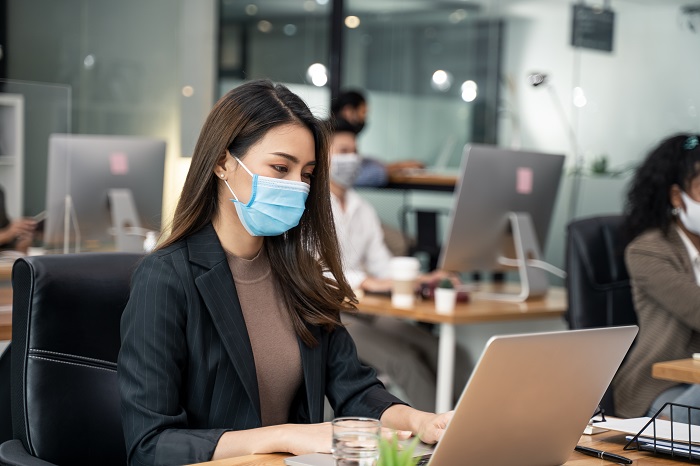
Covid 19 pendamic brought many changes to many industries. Many HR policies changed and some are ammended accordingly.
ReplyDeleteGood article.
Well done
Thus, unexpected pandemics stimulate HR departments' creativity. This means that in a pandemic, the HR department must be creative in terms of work rescheduling, restructuring, responsibility sharing, teamwork, technology use, adopting new hygiene techniques, and introducing new working modes, among other things.Timely topic to discuss. Good article.
ReplyDeleteThis is a timely valuable topic & it directly increases the workload to HRD as well The appropriate human resource management strategies implementations would increase employees’ mental well-being, satisfaction, productivity, motivation, and health safety at the workplace. good luck!
ReplyDelete